Tanzania
Lodge Safaris

3 Days Ngorongoro Crater
3 Days Manyara, Ngorongoro
4 Days Ngorongoro, Manyara
5 Days Ngorongoro Serengeti
6 Days Serengeti, Manyara
6 Days Manyara, Serengeti
7 Days Best of Tanzania
8 Days Classical Safari.
12 Days Safari & Zanzibar
13 Days Combined Tour
Tanzania & Zanzibar Safari

6 Days Wildlife/Zanzibar Beach
7 Days Ngorongoro/Zanzibar Beach
8 Days Manyara/Zanziabr Beach
8 Days Ngorongoro/Zanzibar
9 Days Manyara/Zanzibar Beach
10 Days Manyara/Zanzibar Beach
20 Days - Wildlife / Zanzibar Beach
Tanzania National Parks

Arusha National Park
Mount kilimanjaro
Katavi National Park
Gombe Stream Park
Lake manyara
Serengeti National Park
Ruaha National Park
Mikumi National Park
Tarangire National Park
Rubondo island
Saadani National Park
Kitulo Plateau
Mahale Mountains
Udzungwa Mountains
Safari & Climbing Tour

12 Days Wildlife Tour & Climbing Marangu Route
13 Days Wildlife Tour & Climbing Marangu Route
14 Days Wildlife Tour & Climbing Machame Route.
|
|
Tanzania
National Parks
Arusha
National Park
This park has three distinct zones:
Ngurdoto Crater (often called the 'mini-Ngorongoro');
the shallow alkaline Momella Lakes fed by underground streams (upon
which rest thousands of lesser and greater flamingoes, and many migrant
birds can be seen between May and October); the densely forested slopes
of Mount Meru (one of the rewarding mountains to climb in Africa and
where, among other animal species, live blue monkeys and beautiful black
and white colobus monkeys). Other attractions in the park include the
elephant, giraffe, buffalo, zebra, hippo, various antelopes, leopard and
hyena.The park is 21 km from Arusha on the main Arusha - Moshi road. A
network of gravel roads and tracks navigable by two wheel-drive vehicle
link the park's main features and viewing points. Nevertheless, a few
roads require 4WD vehicles. Park Regulations Those driving around the
park can do without a guide. But due to the danger posed by wild animals
(especially buffaloes), those on foot must take an armed guide or
ranger. The same is required before climbing Mount Meru. Guides and
rangers can be hired from the park headquarters at momela. Driving and
walking around the Ngurdoto Crater rim is allowed, but walking down to
the crater floor is forbidden. Visitor facilities include camp sites,
mountain huts, a rest house and a tourist lodge.
Gombe Stream National Park
Located 16 kilometres north of Kigoma on the shores of Lake Tanganyika,
is the smallest but one of the best known of Tanzania's national parks.
It is one of the few places where chimpanzees can still be found in
their natural habitat. Since 1960, Dr. Jane Goodall and colleagues have
lived here studying the primates. Other attractions include the red
colobus, the red-tail and blue monkeys, grey duiker, bushback and
bushpig. The birds include the African and the trumpeter hornbills,
Ross's turaco, pied and giant kingfishers, and the crowned eagle. Access
to the park is only by water vessel from either Kigoma or Ujiji. Park
entry fees is US$100 per person for each 24 hours spent in the park.
Accommodation is available at a guest house and "hostel" which consists
of several huts. Bring all provisions. The hostel's library is
well-stocked and worth a visit. Camping is with permission along the
lakeshore.
Katavi National Park
This remote and difficult park to reach (strictly recommended for those
of an adventurous spirit) lies on a high flood plain surrounding Lake
Kitavi, to the south of the Mahale Mountains. The main vegetation found
here is the Miombo woodland. It has a wide variety of wildlife
(crocodile, hippo, leopard, lion, roan and sable antelopes, southern
reedbuck, topi, eland, elephant, and one of the largest herds of
buffalo, with as many as 1,600 animals) and offers excellent game
viewing with a real wilderness atmosphere. The diverse woodland, acacia
bush, lakes and swamps have attracted over 400 species of birds,
including large flocks of pelicans. Other attractions are Lakes Katavi
and Chada, which are joined by the River Katuma. The best months to
visit are July to October. Accommodation is at designated camp sites
within the park. Hotels and lodges are at Mpanda, 40 km north.
Kilimanjaro National Park
When Johann Rebman reported that he had seen at the latitude of the
equator a vast mountain capped with snow, the British Geographical
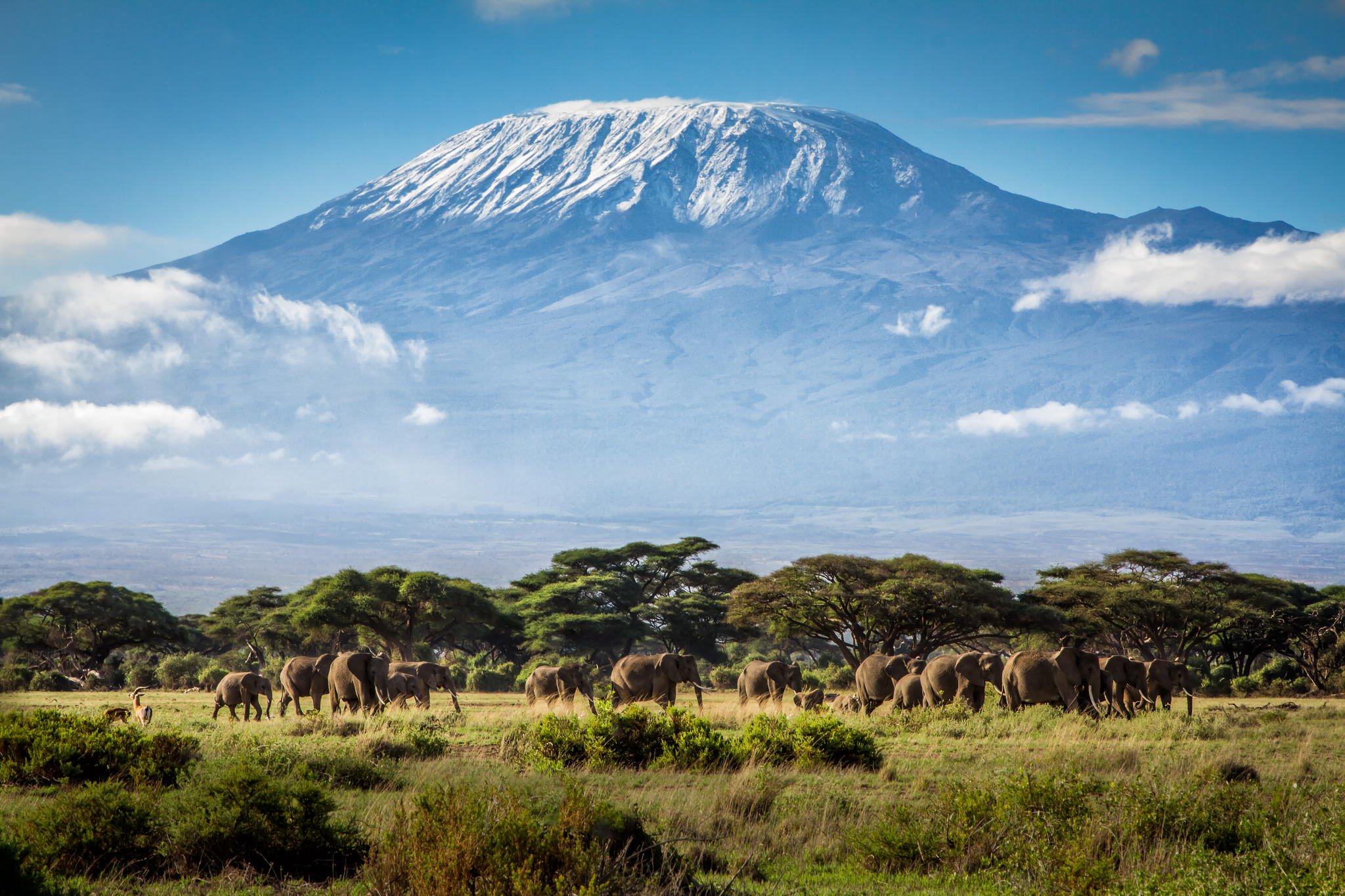
Society Laughed! Mount Kilimanjaro is the highest mountain in Africa and
stands at 5,895 meters, three degrees south of the equator. The
mountain, a dormant volcano, has two peaks - Kibo and Mawezi, which are
surrounded by dense forests full of dazzling variety of flora and fauna.
The area around the mountain is protected territory. The 756 sq. km
lying above 2,700m comprise Kilimanjaro National Park, while parts of
the lower slopes - which support five vegetation zones - are protected
as forest reserves. The main attractions are the volcanic centres; Shira,
Mawezi and Kibo, and the change in forest from savannah grassland to raw
forests, moorland, tundra, semi-desert, and snow. Mount Kilimanjaro has
attracted many tourists and researchers from all over the world. No
visit to Tanzania's northern circuit would be complete without at least
a glimpse of Mount Kilimanjaro. It is the only peak of its size that can
be climbed with relative ease by non-mountaineers, and many take the
opportunity to do so. The mountain can be climbed any time of the year,
although it is often wet in the rain forest zone from mid-March to May.
The summit can be conquered in three days. The youngest person to have
climbed it was an 11-year old and the oldest, 74 years old.
Lake Manyara National Park
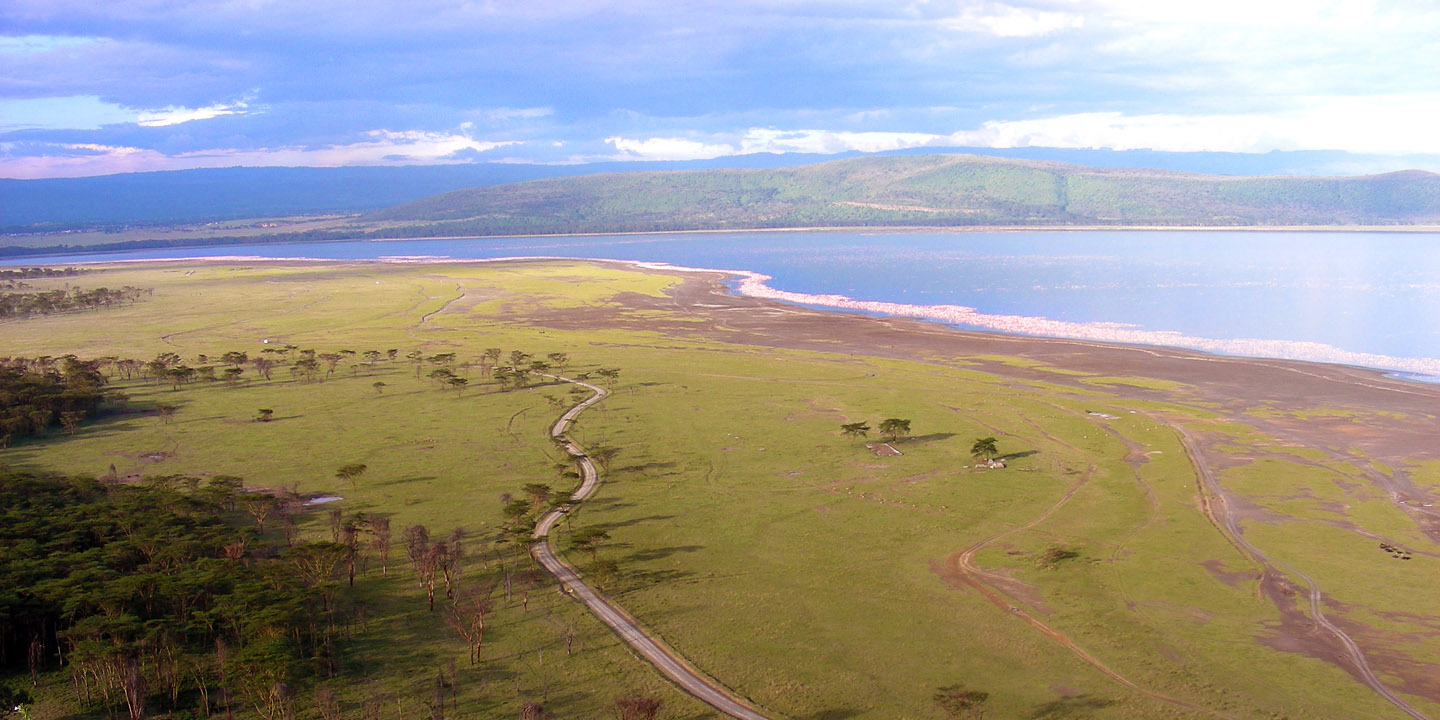
Sheltering under the massive escarpment of the Great Rift Valley, and
covering an area of 325 sq. km, this park is a flash of green amid an
otherwise parched landscape. (In The Green Hills of Africa, Hemmingway
describes the park's magnificent hunting country.) A line of springs
support the lush vegetation of a groundwater forest, where blue monkeys,
baboons and the curious-looking silvery-cheeked hornbill live, among the
more than 350 bird species, the most profuse being the flamingo. It is
also home to large herds of buffalo, elephant, giraffe, leopard, civet,
black rhino, hippo, zebra, impala, antelope, aardvark, the shy pangolin,
bushbuck, waterbuck, and many others. It is also known for its hot
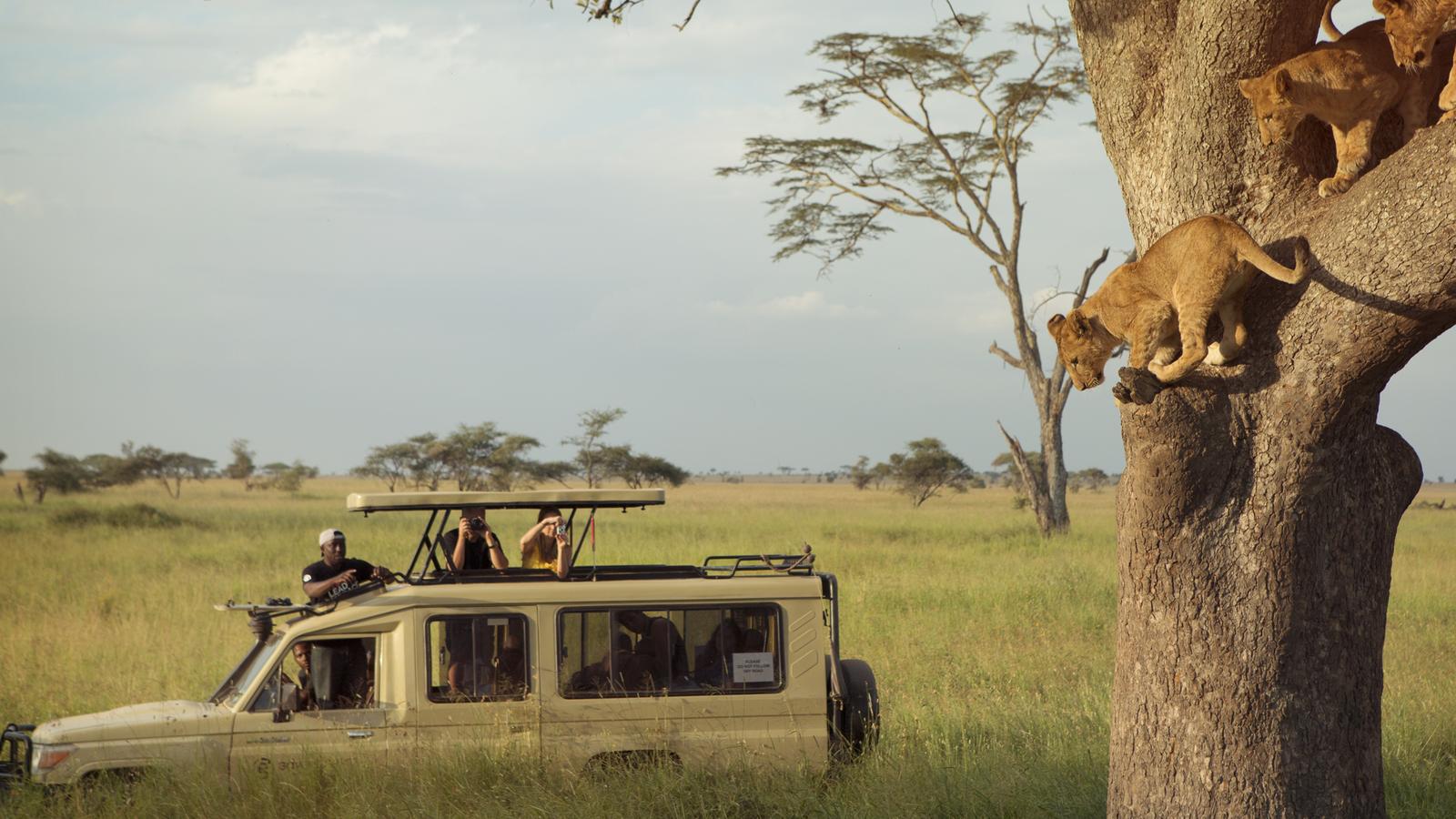
springs and the famous tree-climbing lions that laze in the branches of
the acacia trees. The park is ideal for a day trip. The best time to
visit is during the dry season - January to February, and June to
September. Four-wheel drive vehicles are recommended during the rains.
Budget accommodation is available at Mto-wa-Mbu Village. There are
designated campsites in and outside the park. Other facilities include a
hotel, a hostel and self-catering bandas.
Mahale Mountains National
Park
Located at Ujiji on the shores of Lake Tanganyika, where Stanley is
reputed to have met Livingstone and given the famous greeting "Dr.
Livingstone I presume". The Mahale Mountains, like Gombe, are one of the
last natural home to chimpanzees and are rich in birdlife. The the park
is a unique ecological zone with lowland forest, miombo and open
woodlands, moist and dry savannah grasslands. Wildlife in the park
includes primates, kudu, eland, roan and sable antelopes, giraffe,
buffalo, elephant, lion and leopard.
Access is by boat or plane, both of which are available for charter.
There are no roads and all game viewing is done on foot. It is virtually
the only Tanzanian park where you can walk around. The best months to
visit are May to October. Consult park headquarters at Kigoma for advice
on weather and other conditions before setting off.
Camping is allowed in specific areas. Camping equipment is available for
hire. The guesthouse at Kasiha Village offers limited accommodation, but
you have to bring all provisions.
Mikumi National Park
Located astride the main Dar to Mbeya highway, to the north of Selous
Game Reserve and only 283 km from Dar-es-Salaam, the park is an
important educational centre for students of ecology and conservation,
having been established to protect the environment and resident animals.
The Mikumi flood plain is the main feature of the park along with the
bordering mountain ranges. It has a landing strip and is home to, among
others, the buffalo, zebra, giraffe, lion, wild dogs, python, monitor
lizard, hartebeest, wildebeest, elephant (these elephants are grazers
and do not damage trees), hippo, impala, warthog, eland and antelope.
Birds include the hammerkop, saddle-bill stork, and the malachite
kingfisher. The vegetation is made up of woodland, grassland and swamp.
There are two water holes, Mkata and Chamgore. The park is popular as a
weekend outing for Dar residents. Both budget and luxury accommodation
is available and include a tented camp, a luxury lodge and designated
camp sites.
Ngorongoro Conservation Area
This vast protected area stretches from Lake Natron (the breeding ground
for East Africa's flamingos) in the northeast, to Lake Enyasi in the
south, and Lake Manyara to the east. The area includes the still active
Ol-Ndoinyo Lengai (meaning "Mountain of God" in Maa, the language of the
Masaai) volcano (which last erupted in 1983), Olduvai Gorge and the
NGORONGORO CRATER, the largest unbroken caldera in the world. It has
been described as one of the great natural wonders of the world. Eight
million years ago, the Ngorongoro Crater was an active volcano but its
cone collapsed, forming the crater that is 610 meters deep, 20
kilometres in diameter, and covers an area of 311 sq. km. Spectacular as
it is, the crater accounts for just a tenth of the Ngorongoro
Conservation Area. The crater is home to many species of wild game and
birds. With the exception of impala and topi (due to fierce competition
with the wildebeest) and the giraffe (because there is not much to eat
at tree level), almost every species of African plains mammal lives in
the crater, including the endangered black rhino, and the densest
population of predators in Africa. A strange thing is that the crater
elephants are mainly bulls. The birdlife, which includes the flamingo,
is mainly seasonal, and is also affected by the ratio of soda to fresh
water in Lake Magadi on the crater floor. In the northern, remote area
of the Ngorongoro Conservation Area are the Olmoti and Empaakai craters,
Lake Natron and Oldoinyo Lengai. The mysterious Engakura Ruins, the
remains of a terraced city and a complex irrigation system, lie on the
Eastern side of Empakaai Crater. Their origins are a mystery as there is
no tradition of stone building in this part of Africa. Views from the
rim of the crater are sensational. On the crater floor, grassland blends
into swamps, lakes, rivers, woodland and mountains. You can descend to
the floor of the crater in a four-wheel drive vehicle. Only 4WD vehicles
are allowed into the crater and game rangers are compulsory for all. The
Maasai are permitted to water their cattle at the permanent lake and can
be seen leading their animals in and out of the crater.
Olduvai Gorge
Olduvai, more accurately called Oldupai after the wild sisal in the
area, is the site of some of the most important finds of early hominid
fossils of all time (made famous by the work of the Leakey family) - The
"Nutcracker Man" or Australophithecus boisei who lived 1.8 million years
ago. There is a small informative museum located at the visitor centre.
The gorge is a treasure trove of archeological sites filled with
fossils, settlement remains and stone artefacts. Lecture tours are
offered.
Accommodation is at a camp site.
Ruaha National Park
At 13,000 sq. km, it is the second largest Tanzanian park and one of the
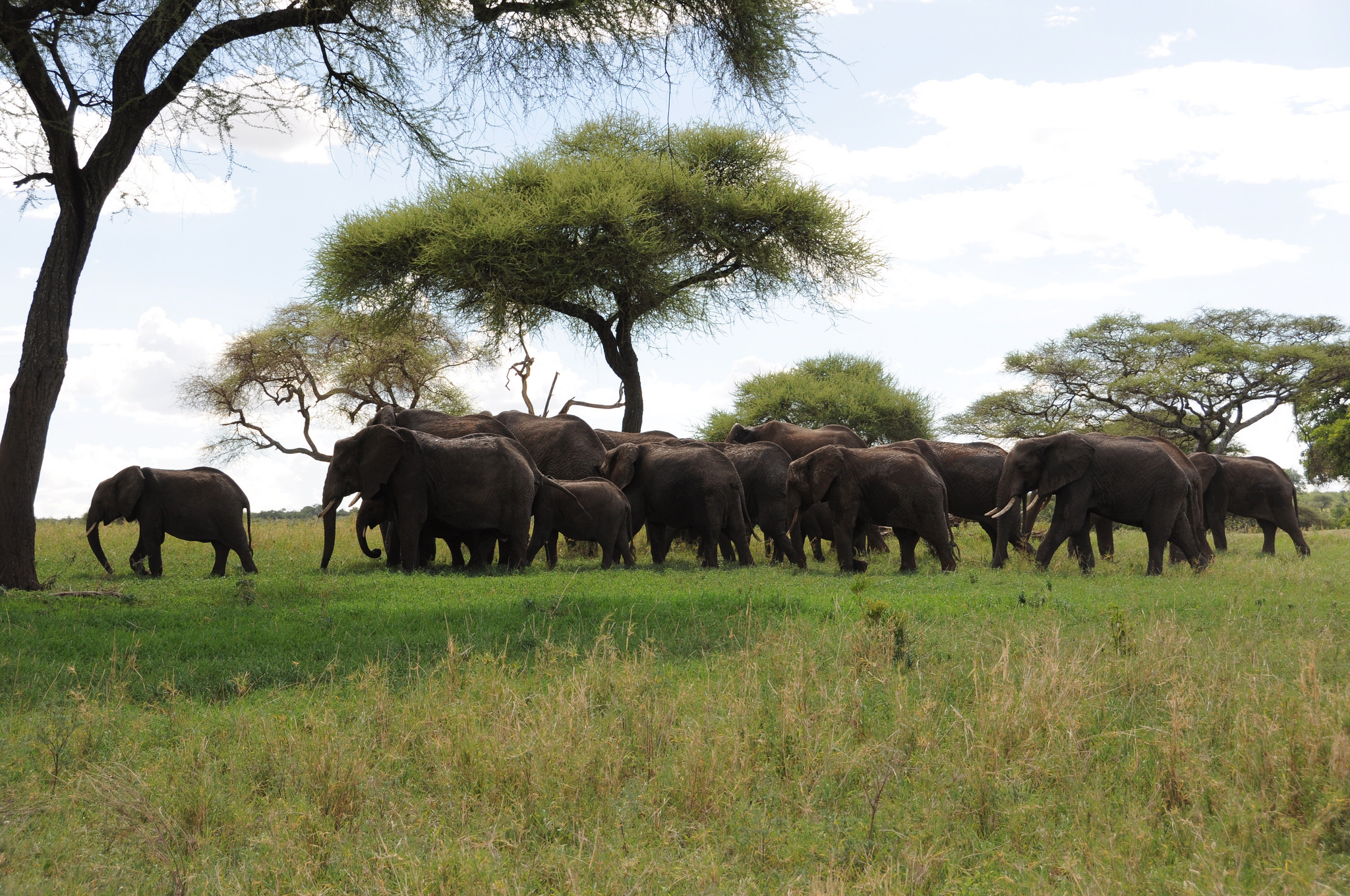
wildest. It is also the world's largest elephant sanctuary. "There is
not a blade of grass here in the dry season", says Kenyan Wildlife
sculptor Rob Glen about Ruaha National Park, his home for the past two
years. This is difficult to believe once the rains have started and the
Great Ruaha River is swollen to a mighty torrent strong enough to drag
an adult hippo downstream. Glen, like watercolour artist Sue Stolberger,
has special permission from Tanzania National Parks (TANAPA) to live in
the country's second largest National Park. Both camp alongside the
northern bank of the river, and are actively involved in the
conservation of the spectacular and abundant wildlife upon which they
base their work. The park represents a transition zone where eastern and
southern African species of fauna and flora overlap. It is the
northernmost example of miombo woodland, common in central Africa, and
the most southerly protected area in which Grant's gazelle, lesser kudu
and striped hyena are found. To be able to see both greater and lesser
kudu and roan and sable antelope in the same park is one of the special
attractions of Ruaha. In the dry season, the river is an excellent place
for observing large numbers of game including lions, leopards, hunting
dogs, giraffe, waterbuck, eland and warthogs. Thousands of birds flock
to Ruaha on their annual migration from Europe to Asia, and 465 bird
species have been sighted in the park. The park's residents include
kingfishrs, plovers, hornbills, green wood hoopoes, bee-eaters, sunbirds
and egrets.
Britain's bilateral aid programme to Tanzania is funding a project to
prepare a management plan for the Ruaha ecosystem, and to 'direct
benefits from wildlife' to the communities living in the game-controlled
area, or 'buffer zone', adjacent to the park. Hunting by tourists and
local residents goes on inside the area, explains project leader Dawn
Hartley, as well as some poaching by the latter, "so its conservation
presented a complex problem for the wildlife authorities". Work carried
out so far includes assisting four villages to establish wildlife
committees, select their own game scouts and organise meat utilisation
schemes. Access is by road. The best months for game viewing are July
and November when the animals are concentrated around shrinking water
holes. During the rest of the year the tracks are almost impassable.
Camping is permitted at various sites including around the park
headquarters at Masembe. There are bandas equipped with beds at the
headquarters. Essentials except food and drink are provided.
Selous Game Reserve
The pristine reserve, a World Heritage Site since 1982, comprises an
area of 55,000 sq. km, covering about six per cent of Tanzania's land
surface. Larger than Switzerland, it is the world's largest game reserve
and second only to the Serengeti in its concentration of wildlife. It is
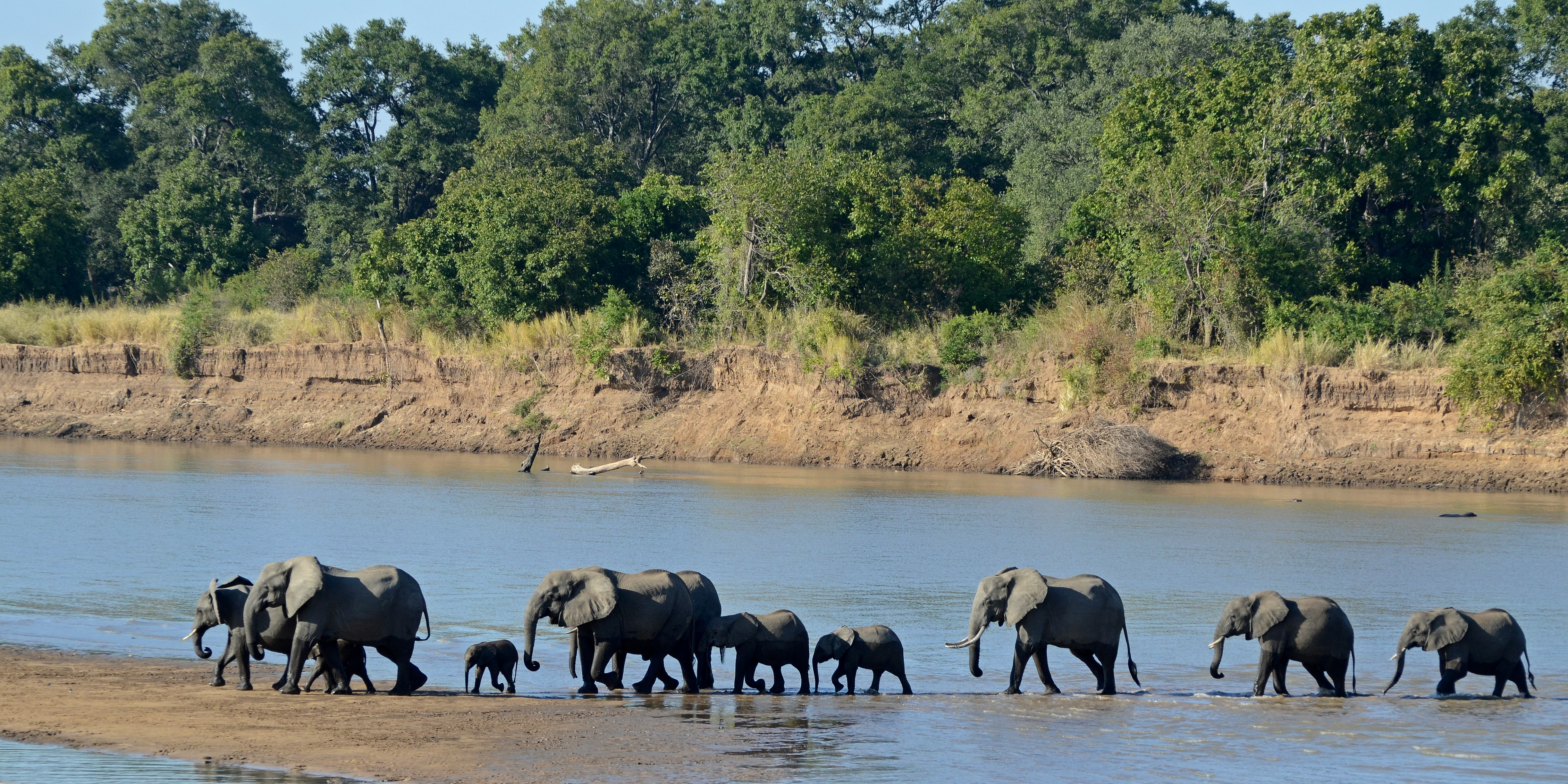
also the sanctuary of the biggest elephant herd in the world, about
32,000 elephants live in the reserve - 70 per cent of those in Tanzania.
The reserve is difficult to describe without the use of superlatives.
Named after British hunter and writer Frederick Courteney Selous who was
killed during the First World War in the Beho Beho region (of the
reserve), the reserve is part of the 75,000 square kilometre Selous
ecosystem, which includes Mikumi National Park, the Kilombero Game
Controlled Areas and sparsely populated areas towards Kilwa and Dar es
Salaam. It encompasses a wide variety of habitats, including open
grasslands, acacia and miombo woodlands and extensive riverine forests.
The reserve contains some of Africa's largest and most important
populations of buffalo and hunting dogs. There are also populations of
black rhino in isolated areas. The swamps form an important habitat for
wetland plants, reptiles and resident and migratory birds. The tourist
sector of the Selous Game Reserve, which is located north of the Rufiji
rivers, contains all the forms of vegetation found in the ecosystem,
including savanna with its mbugas, patches of sticky black cotton soil
that form a perilous trap to motorists during the rainy season. Tall
borassus palms grow alongside the river, dying off when the water level
drops, leaving eery looking collections of what look like giant cigars.
The river supports an abundance of wildlife including elephants, hippos,
crocodiles and plains game, not to mention a spectacular variety, and
number, of bird species. The rapid increase in poaching for ivory and
rhino horn in the 1980s led to a catastrophic decline in Tanzania's
elephant and rhino populations, and the Government approached the
international community for assistance to conserve its wildlife. The
Selous Conservation Programme (SCP) began in 1988, as part of Tanzania's
and Germany's bilateral cooperation agreement. Its objectives are to
safeguard the existence and ecological integrity of the reserve as a
conservation area, and to significantly reduce conflicts between the
reserve and the local population by encouraging a programme of
sustainable wildlife utilisation by local villages. Wild animals can
kill people and livestock, and damage crops in the villages near the
reserve, explains Dr. Ludwig Siege, coordinator of the SCP, and despite
legal restrictions on hunting, a scarcity of meat leads people to hunt
wild animals illegally for food, "and this leads to conflict with
wildlife authorities". Yet in order to be successful, he adds,
conservation has to be practised "with" and "through" the people, and
not against them. An example of such cooperation is a research project
underway to develop non-lethal means of deterring elephants from
damaging crops, which includes the use of flares and rockets. Only low
volume/high price tourism is encouraged in Selous Game Reserve, states
the SCP project brief, in order to avoid high volume 'package' tourism.
The Tanzanian Government recognises that its wildlife sanctuaries need
to be protected, and this means restricting visitor numbers and
development. Management and conservation plans have been drawn up by
experts from the ODA, WWF and the Frankfurt Zoological Institute, to
name but a few, for all parks and reserves. The maintenance of
relatively high entrance fees - visitors must pay US$20 on entering
national parks is "a valuable mechanism to controlling visitor inflows",
says Tanzania Tourist Board chairman Hatim Karimjee, "and must continue
to be reviewed upwards as demand increases". It is not inconceivable, he
adds, that within the next five years some smaller parks may have to
limit visitor numbers. The reseve can be reached from Dar-es-Salaam by
road, air-charter and rail. The best time to go is in the cool season,
between the end of June and the end of October. The parks' lodges and
campsites are closed from April to June. Exploring the park on foot (in
the company of an armed guide) is allowed, and walking safaris are
conducted from all the camps in the reserve. Boat trips up the Rufigi
River are also available. Available accommodation in lodges and luxury
tented camps based in the park's extreme northern end.
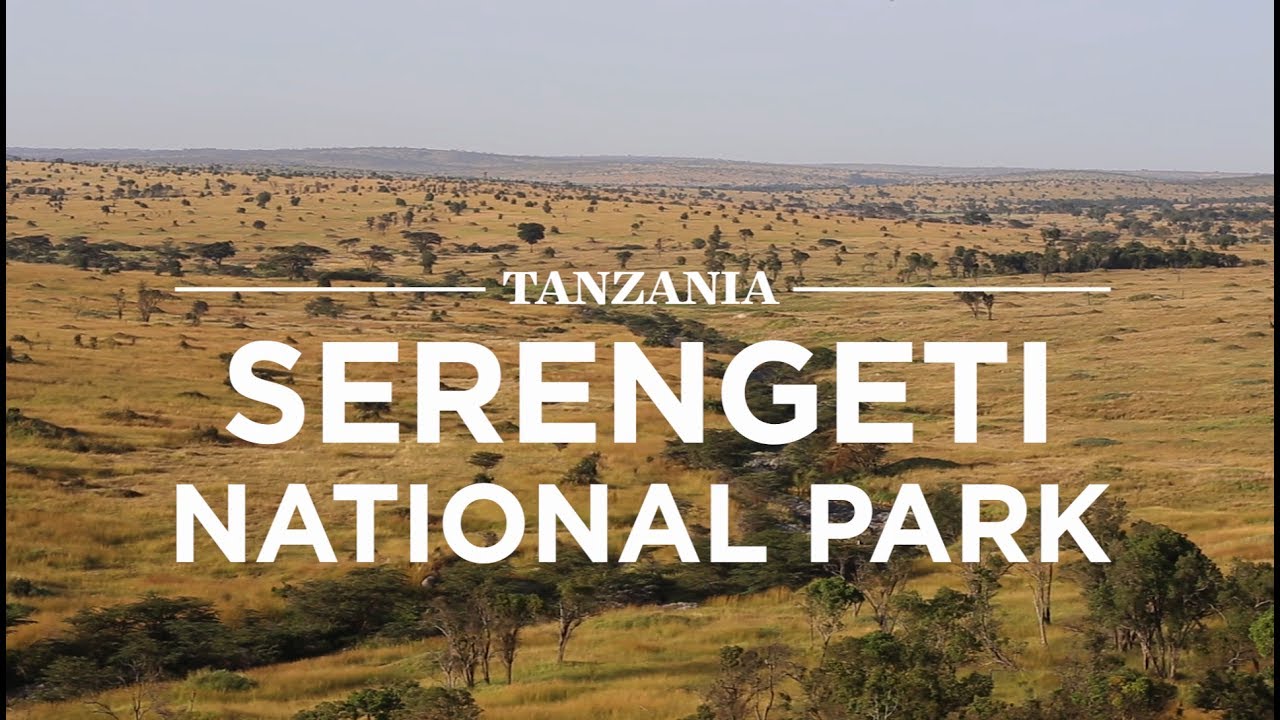
Serengeti National Park
Covering an area of 14,763 square kilometres, equal in size to Northern
Ireland, the world famous Serengeti National Park is Tanzania's oldest
park, and one of the world's last great wildlife refuges. It is
contiguous with Kenya's Masai Mara Game Reserve and stretches as far as
Lake Victoria to the West. Its name comes from the Maasai word Siringet,
meaning 'endless plains'. The park's vegetation ranges from the short
and long grass plains in the south, to the acacia savannah in the centre
and wooded grasslands concentrated around the tributaries of the
Grumenti and the Mara rivers in the park. The western corridor is a
region of wooded highland and extensive plains reaching the edge of Lake
Victoria. In the early morning and evening light, the Serengeti
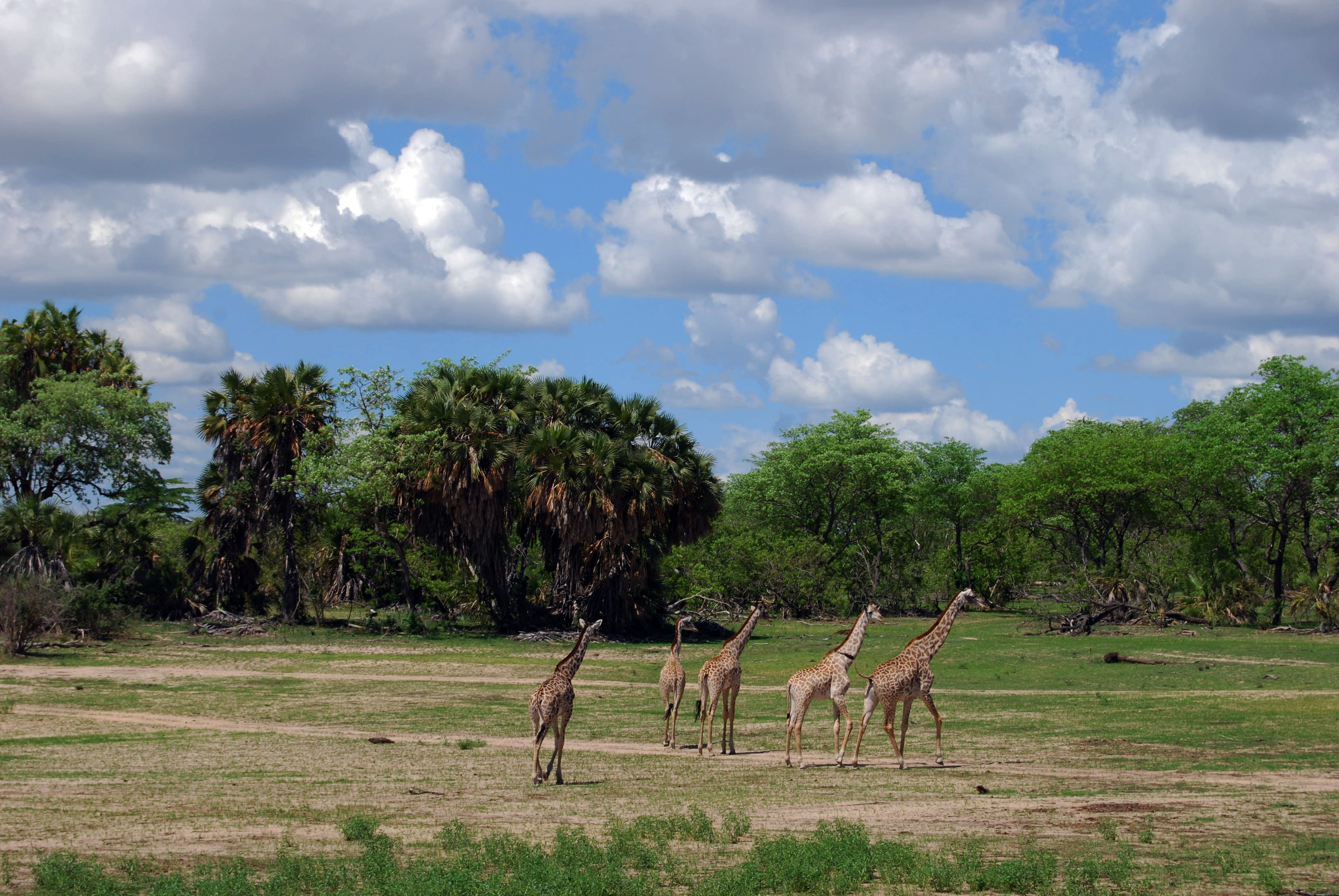
landscape is stunningly beautiful. The Serengeti ecosystem supports the
greatest remaining concentration of plains game in Africa, including
more than three million large mammals. It is the sanctuary of an
estimated four million different animals and birds. The animals roam the
park freely and in the spectacular migrations, huge herds of wild
animals move to other areas of the park in search of greener grazing
grounds (requiring over 4,000 tons of grass each day) and water. The
annual migration into Kenya (in a continuous search of water and
pasture) of more than 1.5 million wildebeest and hundreds of thousands
of zebra and gazelle is triggered by the rains and usually starts in
May, at the end of the wet season. Called the Great Migration, this
constitutes the most breathtaking event in the animal kingdom ever known
to humans. As the dry season intensifies, the herds drift out towards
the west, one group to the north (to Lake Victoria, where there is
permanent water), the other northeast heading for the permanent waters
of the northern rivers and the Mara. The immigration instinct is so
strong that animals die in the rivers as they dive from the banks into
the raging waters to be dispatched by crocodiles. The survivors
concentrate in Kenya's Maasai Mara National Reserve until the grazing
there is exhausted, when they turn south along the eastern and final
stage of the migration route. Before the main exodus, the herds are a
spectacular sight, massed in huge numbers with the week and crippled at
the tail end of the procession, followed by the patient vigilant
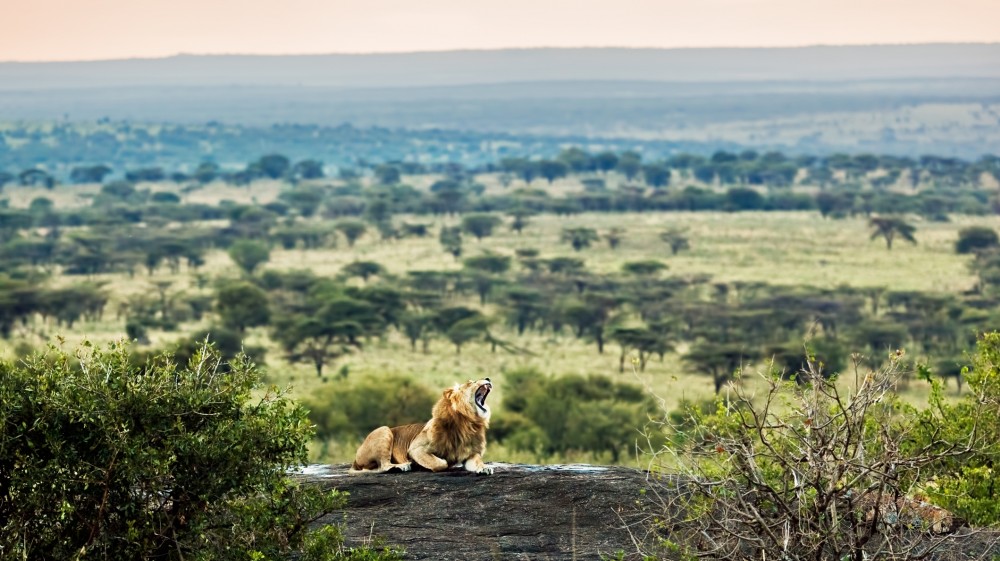
predators, including lions (the adult males of Serengeti have
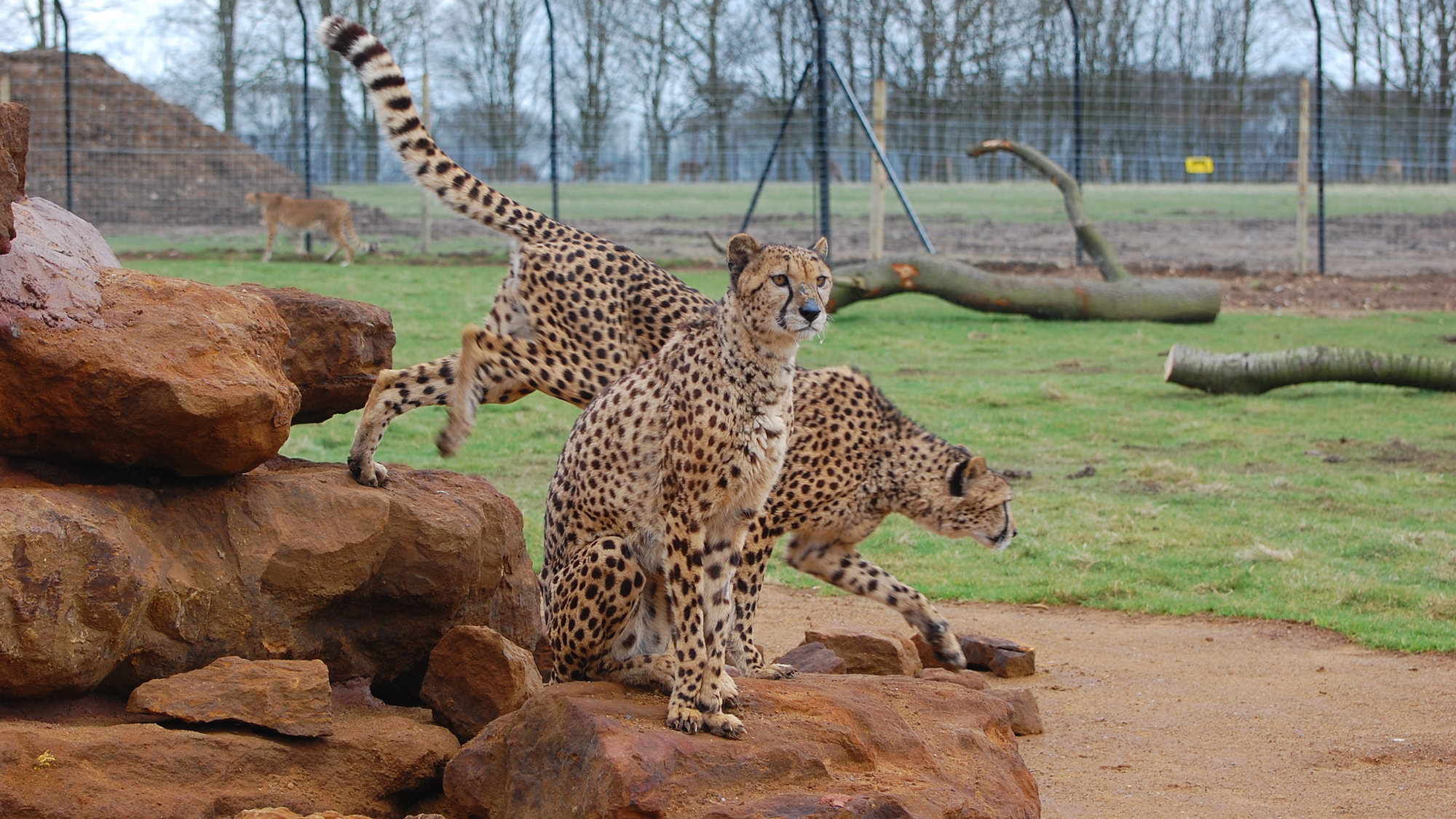
characteristic black manes), cheetahs, hunting dogs and spotted hyena.
The migration coincides with the breeding season, which causes fights
among the males. The best months for visiting are December to February,
and May to July.
Tarangire National Park
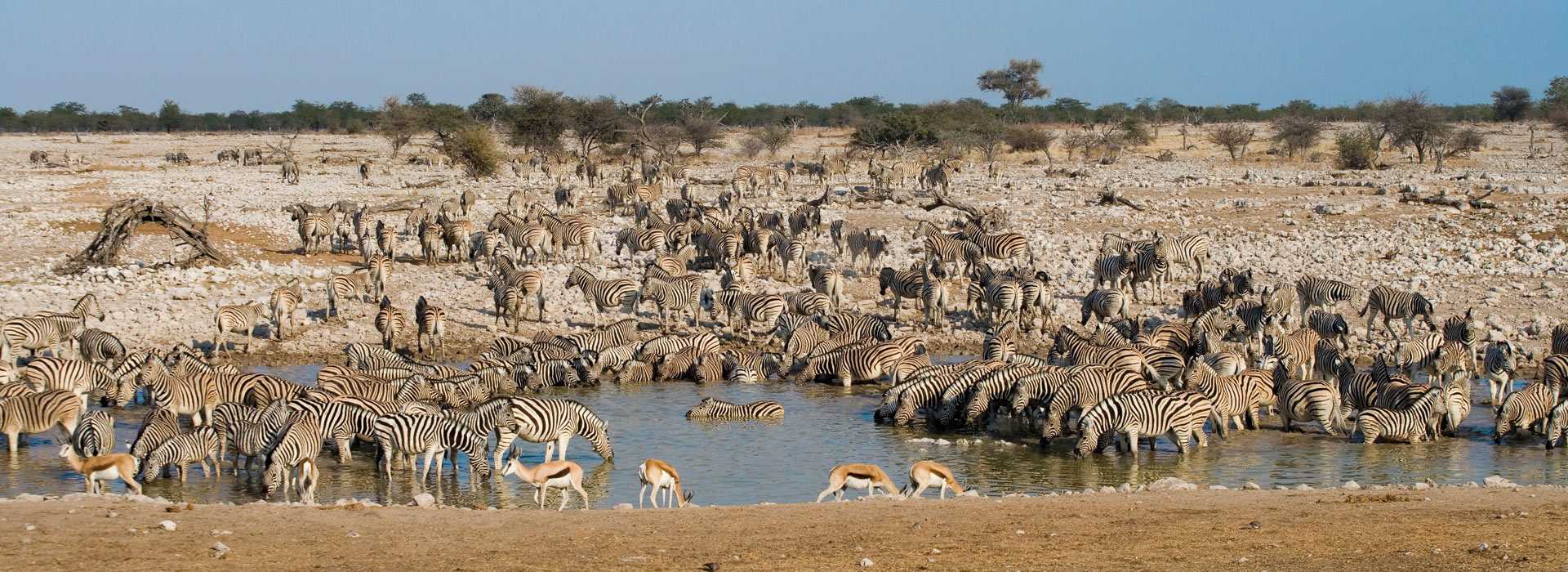
The park's permanent water supply ensures a huge and varied animal
population, especially during the dry season when it rivals that of the
Serengeti. The animals include large herds of elephants, rhino, buffalo,
zebra, lesser and greater kudu, eland, wildebeest, hartebeest, gerenuk,
impala and fringe-eared oryx. This attractive park, with its statuesque
baobab trees, is the main refuge for wildlife from the surrounding part
of the Great Rift Valley during the dry season. Prime game viewing
months are between September and December. It is also an excellent place
for birdwatching. The best birdwatching months being October to May. |
|
Tanzania
Camping Safaris
.jpg)
3 Days Ngorongoro Crater
3 Days Manyara, Ngorongoro
4 Days Ngorongoro, Manyara
5 Days Manyara/Serengeti/Crater
6 Days Manyara/Serengeti/Crater
6 Days Crater/Serengeti/Manyara
7 Days Serengeti/Tarangire
8 Days Crater/Serengeti/Manyara
13 Days Ngorongoro/Masai Mara
Serengeti Migration
Safaris

3 Days Serengeti Migration Safari
4 Days Manyara/Serengeti/Crater
5 Days Ngorongoro/ Serengeti
6 Days Ngorongoro/Serengeti
6 Days Manyara/Serengeti/Crater
Mount Kilimanjaro Climbing

Marangu Climbing Route 1
Marangu Climbing Route
Mweka Route Climbing
Umbwe Climbing Route
Machame Climbing Route
Shira Climbing Route
Lemosho Climbing Route
Rongai Climbing Route
Zanzibar Beach Holidays

Stone Town Tour
Spice Tour
Jozani Forest
Prison Island
Chumbe Marine Park
Mangapwani Caves
3 Days Beach Safari Zanzibar
4 Days Beach Safari Zanzibar
5 Days Beach Safari Zanzibar
|